The bio
Bio, properly explained.
What we use in the salon, how plant-based color actually works and how to treat your hair at home without undoing the work.

What bio means here
Four choices, always the same.
Bio is not a word on the sign. It is a list of things we do and things we stopped doing twenty-five years ago.
-
01
Plant-derived pigments
Color comes from plant powders and extracts. Pigment settles around the fibre instead of forcing it open: hair stays dense to the touch and the reflection shifts with the light.
-
02
Ammonia-free formulas
No harsh alkaline agents prying the cuticle open. Color goes in more slowly, fades more naturally and leaves none of that smell that clings for days.
-
03
No silicones
Silicone gives instant softness, but it is a film sitting on top that hides the real state of the hair. We work on structure, not on optical effect.
-
04
Mixed on the spot
Every blend is prepared in front of you, based on length, porosity and the percentage of white hair. Less leftover product, less waste down the drain.
How it works
A plant-based color, step by step.
It takes longer than an industrial tint and cannot be improvised. That is exactly why it works.
-
01
Hair diagnosis
Porosity, density, elasticity and chemical history: bleaching, perms, box dyes. No two heads share the same formula.
-
02
Patch test
Natural does not mean hypoallergenic. On a first application we test behind the ear 48 hours ahead, especially if you have reacted to dyes, henna or pollen before.
-
03
Fresh blend
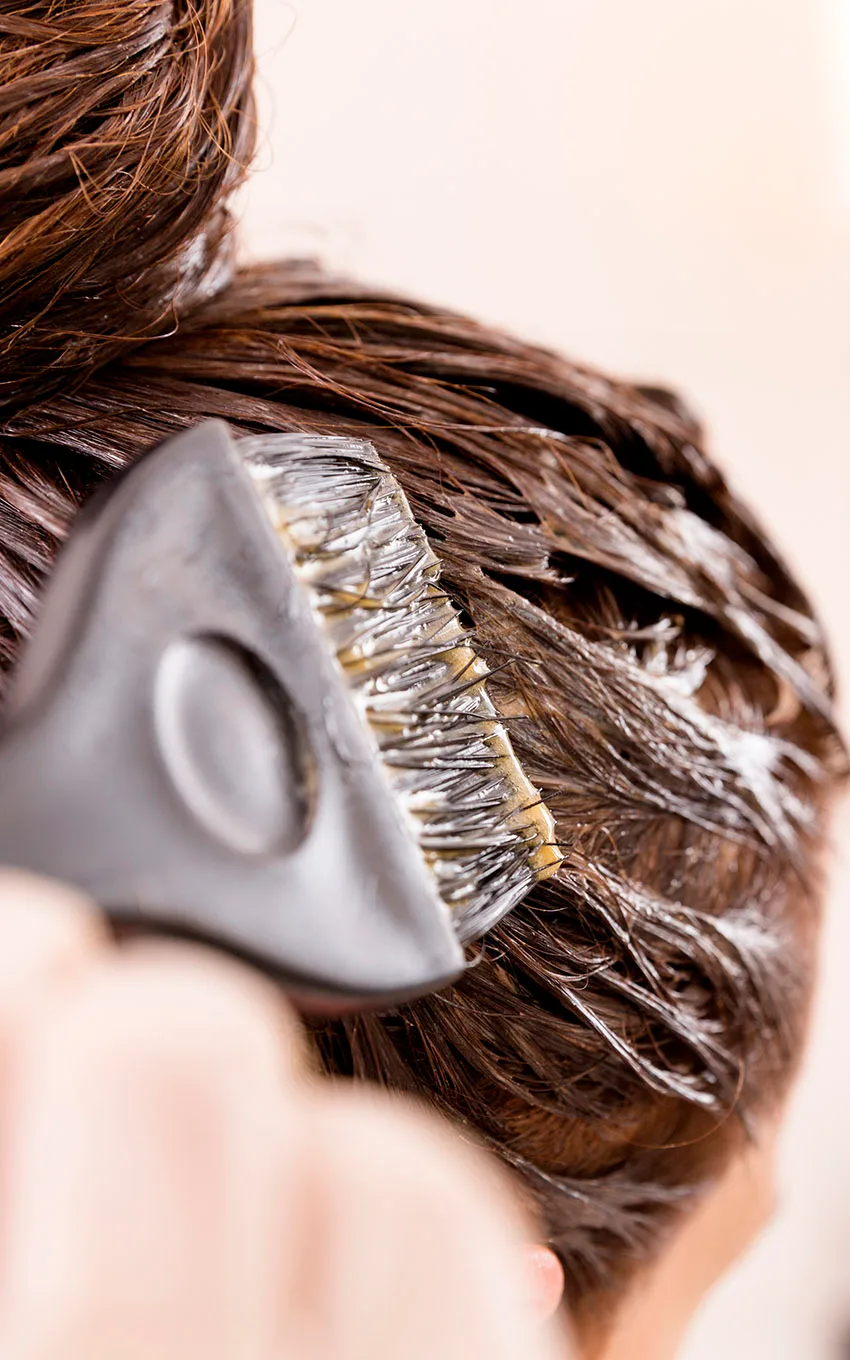
Powders and hot water, mixed on the spot into a dense paste. Used immediately, while still active: it is never kept from one session to the next.
-
04
Processing with heat
Plant pigment works with time and temperature. From 30 to 60 minutes depending on the intensity we want and how resistant the hair is.
-
05
Rinse and acid seal
A long rinse without stripping shampoo, then an acid seal that compacts the cuticle and locks the tone. The step almost everyone skips.
Expectations
What to expect, no illusions.
-
Plant color does not lift
Pigment is added, never removed. Going lighter requires lightening: we do it with targeted techniques such as balayage, keeping product away from the scalp.
-
Color builds up
The first two or three applications deposit pigment into the empty spaces of the fibre. The result improves session after session instead of washing out.
-
White hair becomes reflection
On white hair plant pigment leaves a luminous veil, often lighter than the rest. With closer applications the coverage evens out and the hard regrowth line disappears.
-
The tone settles in 48 hours
Copper, ash and chocolate keep oxidising after the salon. The real verdict on color comes on the third day, in daylight.
After the service
The first three days.
Plant color keeps setting long after you leave. What you do in these three days decides how long it lasts.
-
48 hours
No shampoo. If you really must, water only and a quick rinse.
-
Lukewarm water
Heat reopens the cuticle and takes pigment away with every wash.
-
No sea or pool
Chlorine and salt are the first enemies of a plant-based reflection.
-
Sun
A hat or a protective spray: light oxidises coppers and dulls cool tones.
At home
How to use bio products.
Formulas without silicones and with few surfactants behave differently. Used like a supermarket shampoo they disappoint, used properly they do another job entirely.
-
01
Less product than you think
A hazelnut of shampoo is enough for medium hair. Bio formulas foam less because they hold fewer surfactants: foam was never a measure of cleaning.
-
02
Emulsify before applying
Dilute the shampoo between wet hands until it turns creamy. Poured straight onto the head it spreads badly and you end up using twice as much.
-
03
Wash the scalp, not the lengths
Shampoo is for the scalp. The lengths clean themselves with the soapy water running down during the rinse, without being stressed.
-
04
Two passes, the first one short
If you use a lot of styling: a quick first shampoo that loosens, a second one left on for 60 seconds that actually cleans. Two light gestures beat one aggressive one.
-
05
Conditioner from mid-length down
From the ears down, spread with your hands and then a wide-tooth comb. On the scalp it weighs hair down and it gets greasy sooner.
-
06
Respect the processing time
A plant mask works in a real 5 to 10 minutes. Thirty seconds under the water is money thrown away: use that time to wash your face.
-
07
Oil on damp hair
Two drops warmed between the palms, on lengths that are still damp and never on the scalp. On dry hair it sits on the surface and greases instead of sinking in.
-
08
Heat under control
Dryer on medium, twenty centimetres away, always with a heat protectant. A flat iron used daily cancels any treatment done in the salon.
The transition period
If you are coming from silicone products, for two or three weeks hair will feel less slippery and more "real". It is not the bio product failing: it is the silicone film leaving and letting you feel the actual fibre. After a few washes the feeling changes, and it stays.
Rome's water
Roman water is very hard. Limescale settles on the fibre, dulls color and leaves hair rough. A final cold rinse helps, an occasional chelating treatment in the salon removes the build-up. If you can, a shower filter does more than many masks.
Labels
Reading an INCI in thirty seconds.
The INCI is the ingredient list required on every cosmetic. Knowing how to read it is the fastest way to understand what you are actually buying.
-
Order matters
Ingredients are listed by decreasing quantity. The first five are almost the whole product, what sits at the bottom is often present in traces.
-
Spotting silicones
They almost always end in -cone, -conol or -xane: dimethicone, amodimethicone, cyclopentasiloxane. Instant slip, build-up over time.
-
Surfactants are not all equal
Sodium Lauryl Sulfate and Sodium Laureth Sulfate near the top clean hard and dry out. Gentler options: coco-glucoside, cocamidopropyl betaine, sodium cocoyl isethionate.
-
Good alcohol, bad alcohol
Alcohol denat among the first entries dries. Cetyl, cetearyl and stearyl alcohol are fatty alcohols instead: they soften and give body to creams.
-
Natural is not a certification
The words natural and green are not regulated. Real certifications carry a body and a code on the label, for instance COSMOS, Ecocert or ICEA. A readable INCI is worth more than a leaf printed on the box.
Tailored
Bio, according to your hair.
-
Fine hair
Little product, mask on the ends only, generous rinsing. Volume is built at the roots with cold air and your head down, not with heavy creams.
-
Curly and wavy
Fewer washes, more hydration. Generous conditioner, detangle with fingers on wet hair and apply product on soaking hair to define without frizz.
-
Colored with plant pigment
Gentle acidic shampoos, no weekly chelating, one nourishing mask a week. Plant pigment loves cold water and long gaps between washes.
-
Previously bleached or treated
Rebuild first, color after. On porous fibre plant pigment goes in too fast and turns dark: it needs preparation and sometimes a strand test.
-
Sensitive or flaking scalp
Reduced fragrance, massage with fingertips and never with nails, a long rinse. The scalp is skin: it deserves the same care as your face.
-
White hair
On white hair plant pigment gives light and reflection, not flat coverage. Closer applications at the start, then we find the right rhythm together.
Questions
What you ask us most.
Does plant color cover white hair?
Yes, but differently from a chemical tint. White takes a lighter, luminous tone that reads as a reflection rather than a flat block. Two or three close applications make the coverage full.
How long does it last?
On average four to six weeks, fading gradually and without the hard regrowth line. It depends a lot on how often you wash and at what temperature.
Can I do it over an existing chemical tint?
In most cases yes, but it needs an assessment in the salon and sometimes a test on a hidden strand. On bleached hair or recent perms the result can shift, which is why we never work blind.
Can plant color lighten?
No. No plant pigment removes color. Going lighter requires technical lightening, which we do with targeted applications away from the scalp and a rebuilding treatment after.
Is the allergy test really necessary?
Yes, the first time. Natural does not mean allergen-free: henna, indigo and some plants can cause reactions. The test goes behind the ear 48 hours before and takes a minute.
Can I do it while pregnant?
Many clients choose plant color during pregnancy precisely for the absence of ammonia and the reduced smell. It remains a choice to confirm with your doctor, and we say so plainly.
What does it smell like?
A vegetal smell, of grass and wet earth, still noticeable in the following days when hair gets wet. Very far from the sharp smell of a traditional tint.
Do I have to buy salon products?
No. We tell you what to look for in an INCI and what to avoid: good products exist elsewhere too. What we ask for is consistency, because an aggressive shampoo undoes a month of salon work.
First step
We start with a diagnosis.
Before any service we look at the hair, the scalp and their history. From there we decide together what makes sense, even when the answer is to wait.